I’m not paying that much for vegetables…Gimme some meat!
Dec 17, 2025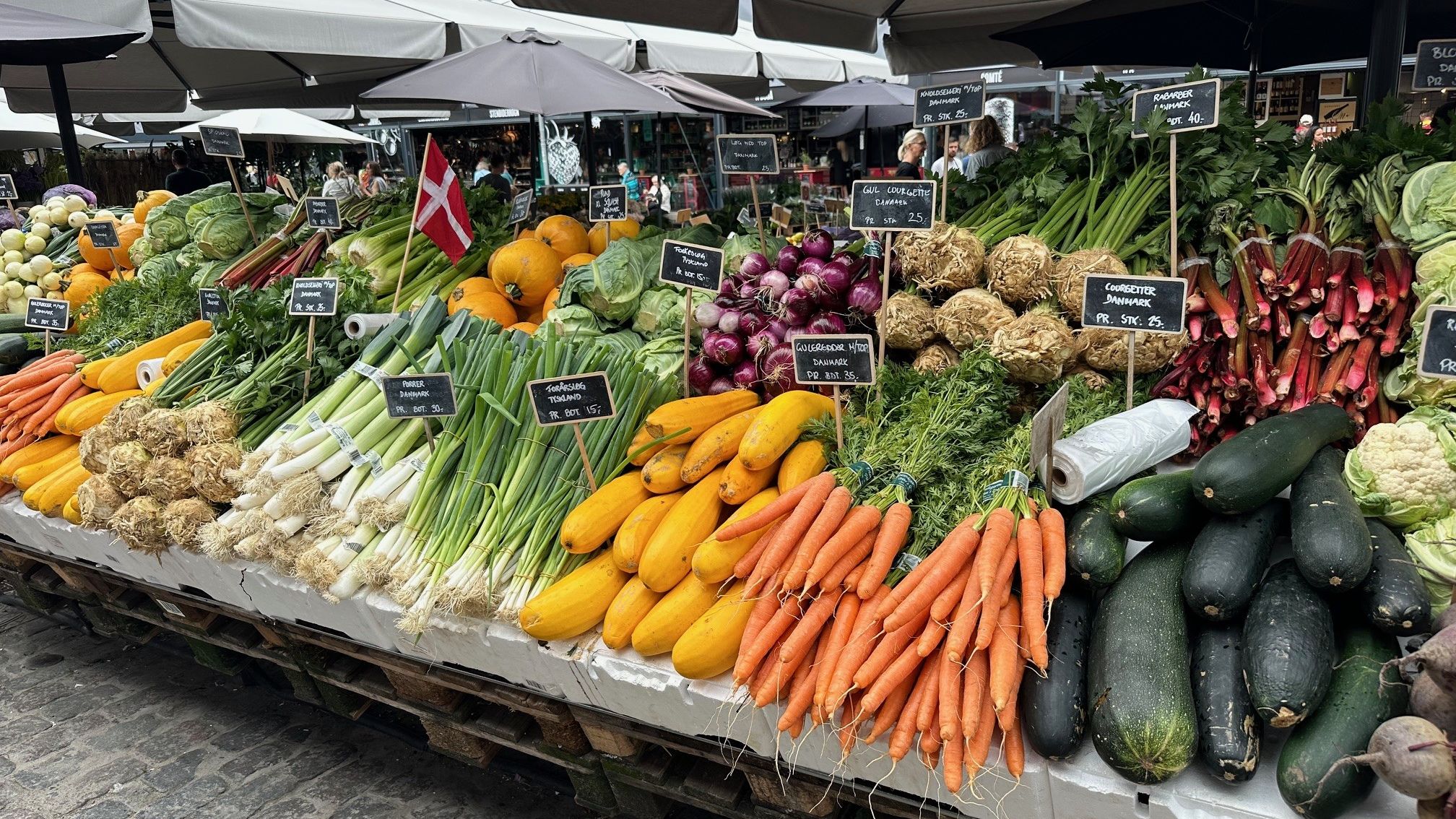
Why expensive vegetables are still cheaper than cheap meat
So you went to the doctor, you got on the scale, and—uh oh—you just found out you're obese, your cholesterol is 250, and that chest pain is heartburn from your diet. How can this be? You got your health advice from the Secretary of Health and Human Services—or future pandemic’s Patient Zero—Robert F. Kennedy. (Remember, he has no education or background in anything related to that field.) So you listen to this fancy-pants doctor about eating healthy. “But it’s so expensive,” you say.
Well—you’re wrong. You’re wrong at face value, you’re wrong statistically, and you’re wrong as you fork over $500 for heartburn medication. So buckle up, because today we’re gonna learn about vegetables and how they might actually be better for your health than beef tallow and raw liver… and cheaper.
I’ve been fascinated by this American mentality for the better part of a decade. As a chef, I take full responsibility for this epidemic of—cue the ominous music—“MEAT MADNESS.” I admit it: I’m so damn good at cooking that I took something naturally indulgent—something the church bans on Fridays during Lent—and cooked it so well people convinced themselves it was curing their ailments. It made people thinner, lowered heart disease, cured cancer, MADE AMERICA GREAT AGAIN, right?!
Obviously none of that actually happened. So what gives with the… MEAT MADNESS? (Sorry, last time.)
We all know the success of meat is the pillar of the American economy, right? Actually, the American meat sector is a money loser for everyone. You pay for meat over and over again: through subsidies, inflated real estate costs from grazing land, taxes supporting those subsidies, and environmental impacts like climate change, water scarcity, and pollution (because yes, manure is real). Are you seriously saying that the Prime New York Strip is not the most affordable and healthy option for my family?
Surprisingly—no.
So what is a good, healthy alternative that won’t break the bank? Plants. That stuff that grows in dirt from tiny seeds in a few weeks. Growing plants is cheaper than creating a living animal that needs food, care, medical treatment, and years of resources.
In addition to cost differences, there are major nutritional differences—like fiber, which meat does not have, and lower fat content. Before we start breaking down the nuances, I want to clarify something.
First, say it with me and say it loud… YOU DO NOT NEED THAT MUCH PROTEIN. You are not a starving, malnourished child from a 90s Sally Struthers ad. You work at a desk most of the day, trying to fit in an hour of exercise if you’re lucky. That’s why I’m basing this on science—not on that totally fire TikTok video @carnivorebonerSixSeven posted about injecting cow liver into your bloodstream like our caveman ancestors “totally” did.
The actual protein recommendation is about 0.8 grams per kilo, which for me is roughly 80 grams (for reference, I’m 6’3”, 215 lbs, and work out daily). So let’s look at my radical Anti-American Socialist Manifesto–type foods that keep me alive and healthy.
We’re keeping this simple: one plant and one animal product. You can dive deeper using the sources below. The easiest breakdown will be protein, fiber, fat, and cholesterol. For team plants, we’re using lentils—the ignored little legume that packs a serious nutritional punch. For meat, we’re using a simple 6.5-ounce lean cut of cooked beef (think: your entire hand as a piece of meat… which it is).
Nutrients (per 500 calories)
|
Lentils 1.5 cups (cooked) |
Beef 6.5 oz (lean, cooked) |
|
|
Protein (g) |
37.5 |
43 |
|
Fat (g) |
2 |
25 |
|
Carbohydrates (g) |
77.5 |
0 |
|
Fiber (g) |
24 |
0 |
|
Cholesterol (mg) |
0 |
145 |
What does this mean? Basically, to hit my calorie count for the day from meat, I’d need to eat 40 ounces—or two and a half pounds—of beef. Sounds ridiculous, right? With lentils, I’m getting similar protein, significantly more fiber, carbohydrates (which are good), and zero cholesterol. We should also be focusing more on fiber which we are severely deficient in in this country.
Cost-wise? That cut of meat runs about $10 per pound, or roughly $4 for the portion above. Lentils are about $1 for a 16‑ounce bag—double the portion listed.
To sum up: you don’t have to give up meat, but you could give up a lot of it. There isn’t a nutritional need for it in such large amounts, and honestly, it’s just expensive to eat.
I guess we shouldn’t be surprised that an administration full of wealthy elites thinks expensive meat should be consumed daily. Please continue following for more breakdowns about how to eat healthy without spending a lot. Maybe I’ll do a little fireside chat for you guys… or not.(Seriously, it couldn’t hurt to read a little more.)
I have references for all of this information at the end, but you have to do your own research. I’m not gonna cook your dinner, and I’m definitely not gonna make you learn facts. The fact that you’re subscribed tells me you believe in what I’m saying and want to do better.
Bibliography
Arrigoni, A., Marveggio, D., Allievi, F., Dotelli, G., & Scaccabarozzi, G. (2023). Environmental and health-related external costs of meat consumption in Italy: Estimations and recommendations through life cycle assessment. Science of the Total Environment, 857, 159324.
Laborde, D., Mamun, A., Martin, W., Piñeiro, V., & Vos, R. (2021). Agricultural subsidies and global greenhouse gas emissions. Nature Communications, 12, 2601.
Pieper, M., Michalke, A., & Gaugler, T. (2020). Calculation of external climate costs for food highlights inadequate pricing of animal products. Nature Communications, 11, 6117.
Additional Optional Sources
Willett, W. et al. (2019). Food in the Anthropocene: the EAT–Lancet Commission on healthy diets from sustainable food systems. The Lancet.
Springmann, M. et al. (2018). Options for keeping the food system within environmental limits. Nature.
Get the latest blogs sent to your email.
We hate SPAM. We will never sell your information, for any reason.