Do All Foods That Claim to Be 'Gut-Healthy' Really Help?
Sep 15, 2024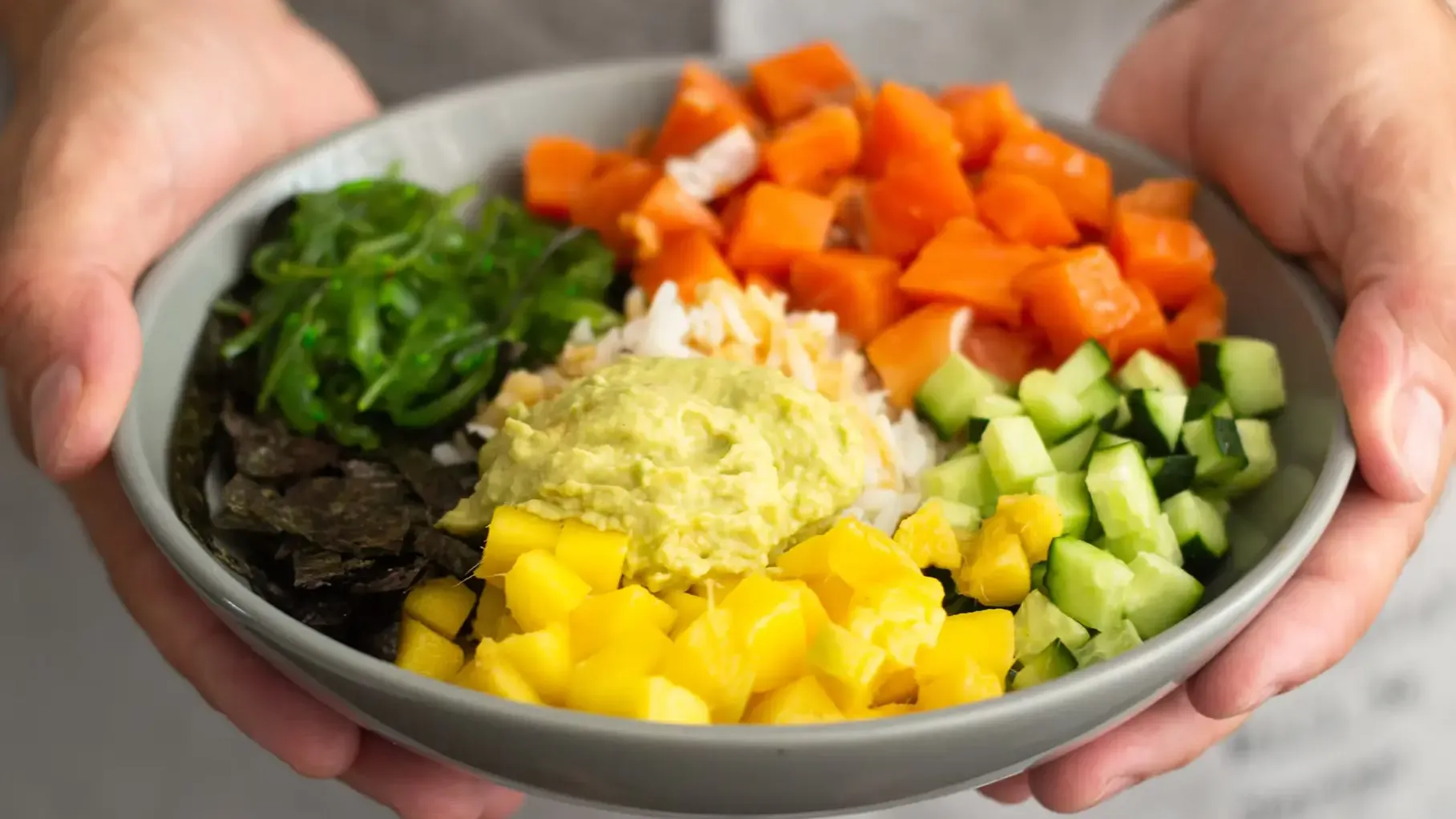
A Chef’s Perspective on Plants vs. Fermented Dairy
The gut microbiome has become one of the most talked-about areas in nutrition and wellness. From kombucha to kimchi, from celery juice to kefir, everywhere you look there’s a product promising to “heal your gut.” As a chef who has spent years working with food systems and teaching people about nutrition, I’ve had countless conversations where I’ve had to explain: gut health isn’t just about eating sauerkraut or downing probiotic shots. The reality is more nuanced—and more delicious—than that.
I’ll never forget explaining this to my mother, who has Celiac disease and other autoimmune conditions. For her, gut health isn’t some trendy buzzword—it’s essential to managing her well-being. Teaching her how to incorporate gut-friendly foods into her diet wasn’t just about finding gluten-free options; it was about helping her understand that the foundation of a healthy microbiome comes from everyday foods like beans, berries, and whole grains. That lesson has shaped how I teach others: gut health isn’t one thing—it’s a combination of many small choices, layered over time.
Plant-Based Foods: A Broad Spectrum of Benefits
Plants—fruits, vegetables, whole grains, legumes, nuts, and seeds—are rich in fibers, polyphenols, and other compounds that serve as prebiotics. Think of prebiotics as the “fertilizer” that feeds your good gut bugs. When I design recipes or teach kids how to build healthy plates, I always highlight how these foods are the quiet heroes of gut health.
- Fiber in plants is broken down by gut microbes into short-chain fatty acids (SCFAs), like butyrate, which reduce inflammation and strengthen the gut barrier (Makki et al., 2018).
- Polyphenols, those colorful plant compounds found in things like berries and tea, promote beneficial microbes and suppress harmful ones (Cardona et al., 2013).
- Legumes (beans, lentils, chickpeas) are some of my favorite teaching tools because they’re affordable, versatile, and proven to boost microbial diversity (Ríos-Covián et al., 2016).
From a chef’s perspective, this means that every plant-based dish is an opportunity to feed the microbiome. A simple grain bowl or a pot of lentil soup isn’t just nourishing—it’s literally reshaping the ecosystem inside you.
Yogurt and Kefir: The Culture Factor
Here’s where things get interesting. Dairy, on its own, isn’t particularly gut-friendly. But when it’s fermented—like yogurt or kefir—it becomes a different story. These foods contain live cultures that can temporarily boost the population of beneficial microbes.
- Yogurt has been shown to increase Lactobacillus and Bifidobacterium in the gut (Marco et al., 2017).
- Kefir, with its symbiotic mix of bacteria and yeasts, has antimicrobial and anti-inflammatory properties (Bourrie et al., 2016).
But here’s the catch: these benefits are strain-specific and temporary. The microbes from yogurt and kefir don’t usually take up permanent residence in your gut (Hill et al., 2014).
That’s why, when people tell me, “I’m taking care of my gut—I eat yogurt every day,” I gently remind them: yogurt helps, but it’s not the whole picture.
Plants vs. Cultured Dairy: Key Differences
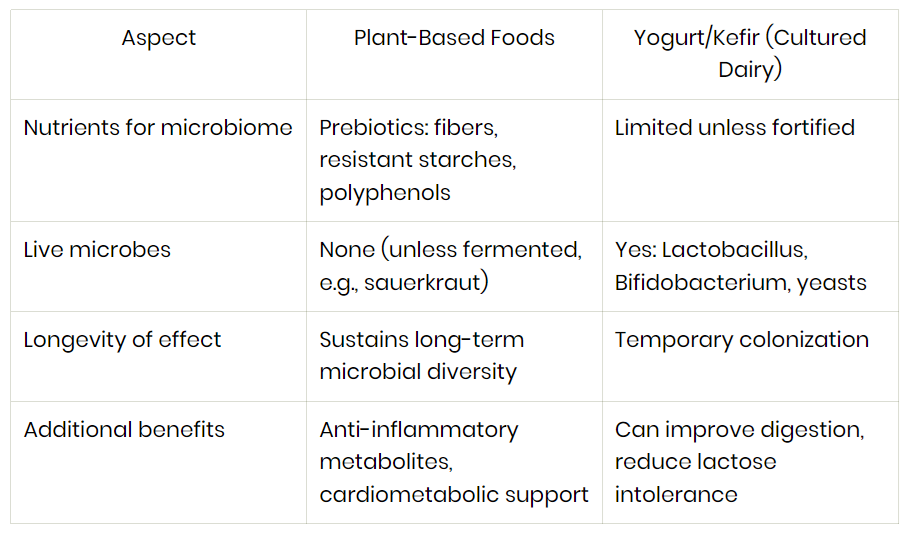
From my vantage point in the kitchen, this table boils down to one truth: plants create the foundation, and cultured foods offer the finishing touch.
Why This Matters in Real Life for Gut Health
When I do chef demos at farmers markets, I’m often asked: “So what should I eat for gut health—sauerkraut, kombucha, kefir?” My answer is always the same: those foods can be helpful, but they’re not magic bullets. Your microbiome doesn’t just thrive on fermented foods—it thrives on variety, especially plants.
When my mom started adding lentils, leafy greens, and berries to her meals—alongside the occasional yogurt—she noticed her digestion and energy improve more than when she was just focusing on “gut health products.” That’s the story I try to share with my audiences: gut health is built meal by meal, not supplement by supplement.
Bottom Line
- A diet rich in plant-based foods lays the foundation for a resilient and diverse microbiome.
- Yogurt and kefir provide a boost, but their effects are short-term and culture-dependent.
- The best strategy is a combination: eat plenty of plants every day, and sprinkle in fermented foods when you can.
Gut health isn’t about chasing the trendiest “superfood.” It’s about the simple, everyday foods that quietly do the heavy lifting—something I’ve seen in my own family and in the communities I cook for.
Something to Chew On
I’m just a chef. This is just advice, based on the best science out there. You don’t have to take it. My own mother rarely does—then she feels awful, complains about being sick all the time, and circles back asking for my advice.
Deep down, we know what’s good for us. Our bodies tell us. We evolved, survived, and even thrived over thousands of years without MRIs, nutritionists, or gimmicky “Liver King Caveman Protein” powders. For 99.9% of human history, we had none of that. Yet we made it through the Dark Ages, the Ice Age, famine, plague, and war.
So no, you don’t need some flashy new “movement” to tell you what common sense already does. You know cheese fries drowning in ranch aren’t health food—no matter how you dress it up. And MAHA? Let’s be real. That’s not a health revolution, that’s a merch line with a marketing plan. Google it.
Here’s the truth: you are not the exception to the rule. No one is. The system works because you are human, and you evolved from the same biology as everyone else. The only real question is: are you willing to listen? Listen to your body—not your cravings, not the ads in your feed, not the latest algorithm-driven fad.
References
- Makki, K., Deehan, E. C., Walter, J., & Bäckhed, F. (2018). The Impact of Dietary Fiber on Gut Microbiota in Host Health and Disease. Cell Host & Microbe, 23(6), 705–715.
- Cardona, F., Andrés-Lacueva, C., Tulipani, S., Tinahones, F. J., & Queipo-Ortuño, M. I. (2013). Benefits of polyphenols on gut microbiota and implications in human health. Journal of Nutritional Biochemistry, 24(8), 1415–1422.
- Ríos-Covián, D., Ruas-Madiedo, P., Margolles, A., Gueimonde, M., de los Reyes-Gavilán, C. G., & Salazar, N. (2016). Intestinal Short Chain Fatty Acids and their Link with Diet and Human Health. Frontiers in Microbiology, 7, 185.
- Marco, M. L., et al. (2017). Health benefits of fermented foods: microbiota and beyond. Current Opinion in Biotechnology, 44, 94–102.
- Bourrie, B. C. T., Willing, B. P., & Cotter, P. D. (2016). The microbiota and health promoting characteristics of the fermented beverage kefir. Frontiers in Microbiology, 7, 647.
- Hill, C., et al. (2014). The International Scientific Association for Probiotics and Prebiotics consensus statement on the scope and appropriate use of the term probiotic. Nature Reviews Gastroenterology & Hepatology, 11(8), 506–514.
- Gibson, G. R., et al. (2017). The concept of the microbiome as a driver of health and disease. Journal of Clinical Gastroenterology, 51 Suppl 1, S3–S6.
- David, L. A., et al. (2014). Diet rapidly and reproducibly alters the human gut microbiome. Nature, 505(7484), 559–563.
Get the latest blogs sent to your email.
We hate SPAM. We will never sell your information, for any reason.